
San Lorenzo Cathedral, Lugano TI
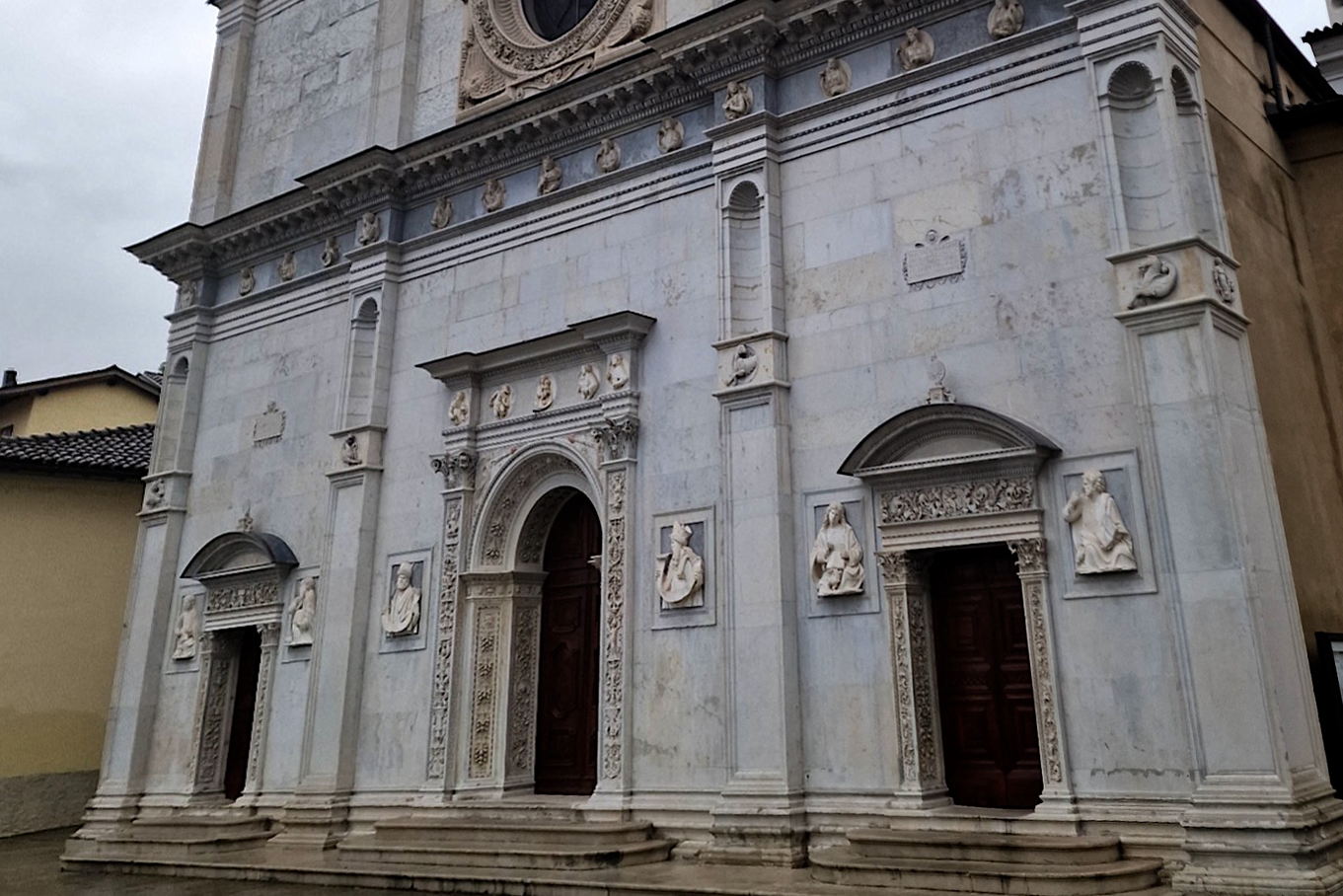 © SUPSI / Francesca Piqué
Lugano Cathedral is located on a slope between Lugano railway station and the old town of Lugano at around 304 metres above sea level. The current building is a basilica of Romanesque origin, believed to date back to the 11th century. In the second half of the 15th century the church was extended and reoriented and in 1517 the new main façade facing east was constructed. It is the most important renaissance façade in Switzerland and is made with three kinds of stone: Saltrio, Viggiu and Carrara marble.
The church, especially its interiors, was restored under the direction of the architect Augusto Guidini in the early 20thcentury (1905−1910). In 2000 a four-year conservation program for the façade was started under the direction of the architect Tita Carloni.
In 2023 SUPSI conducted a full revision and conservation of the stone façade, and the marble elements were the subject of two detailed Master thesis (Bordi 2019 and Walther 2026). The deterioration mechanisms are linked to water and heat.
Our Questions
- How does the increase in temperature affect ongoing deterioration?
- How do increased amounts and intensity of rainwater and hail affect stone deterioration?
- What inspections and maintenance are required to keep the stonework of the façade in good condition?
 © SUPSI / Francesca Piqué
Participants
- Francesca Piqué, project team member
- Cristian Scapozza, project team member
- Tiziano Teruzzi, project team member
- Giovanni Ferrini, architect
- Stefano Alberio, architect
- Jacopo Gilardi, conservator-restorer
- Diocese of Lugano